

Pump.fun has adjusted its liquidity handling method after new token listings. The platform has set the BOOST mode as the default mechanism for all newly migrated tokens, re-injecting a portion of the liquidity that would otherwise be permanently locked during migration into the market for short-term buybacks and burns after the token migration.
Automatic repurchase 5 minutes after migration
According to Pump.fun, in the past, when tokens migrated from the bonding curve to the liquidity pool, about 20% of the liquidity was permanently locked. This portion of funds could no longer be used by traders, and the platform referred to it as "dead liquidity."
Once the BOOST mode is enabled, these funds will no longer be idle. Instead, they will be automatically purchased within 5 minutes of the token migration completion, based on the time-weighted average price, and the purchased tokens will be directly destroyed. The platform states that each token that completes the migration will receive a liquidity injection equivalent to 17.6 SOL; for USDC trading pairs, this is approximately $2,516.
Pump.fun stated that users' trading methods on the bonding curve and in liquidity pools will not change as a result. The new mechanism applies to Pump.fun tokens that were migrated after 10:23 AM ET on July 21; tokens migrated earlier, as well as projects launched through Mayhem, are not included in this adjustment.
Responding to criticism of insufficient liquidity
Prior to this update, the market had been questioning the liquidity depth of the meme tokens on the Pump.fun platform for several weeks. Some traders compared it to Robinhood's Launchpad, arguing that some of the smaller meme tokens on the latter actually have deeper liquidity.
Some users have also questioned why some Pump.fun tokens, valued at tens of millions of dollars, still experience significant volatility due to relatively small sell orders. The crux of the controversy lies in the fact that shallow liquidity amplifies slippage, limiting buyers from committing larger amounts of capital.
Pump.fun co-founder Alon stated that this change can increase liquidity by approximately 20% for each new migrated token without altering how users trade, and could potentially inject hundreds of millions of dollars into the ecosystem over a longer period. Another co-founder, Sapijiju, explained that the team set the buyback window to 5 minutes because they believe the initial post-migration phase is most critical to the token's subsequent performance.
Traders generally gave it a positive review.
Bullpen co-founder and trader Ansem called the update a meaningful improvement. He believes that deeper liquidity helps alleviate the problem of high slippage, which is one of the reasons why many tokens struggle to attract larger buy orders and continue to rise in valuation.
Ansem previously mentioned in his podcast that if he were to adjust Pump.fun, one of his priorities would be to increase liquidity depth, reduce clone projects, and promote platform airdrops.
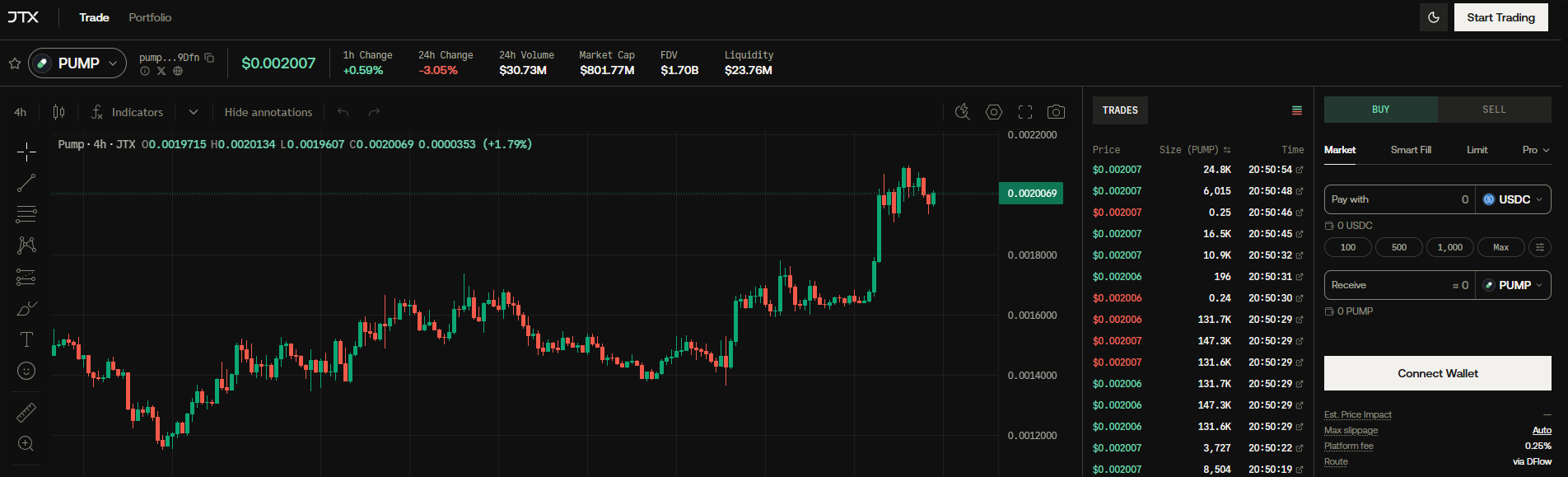
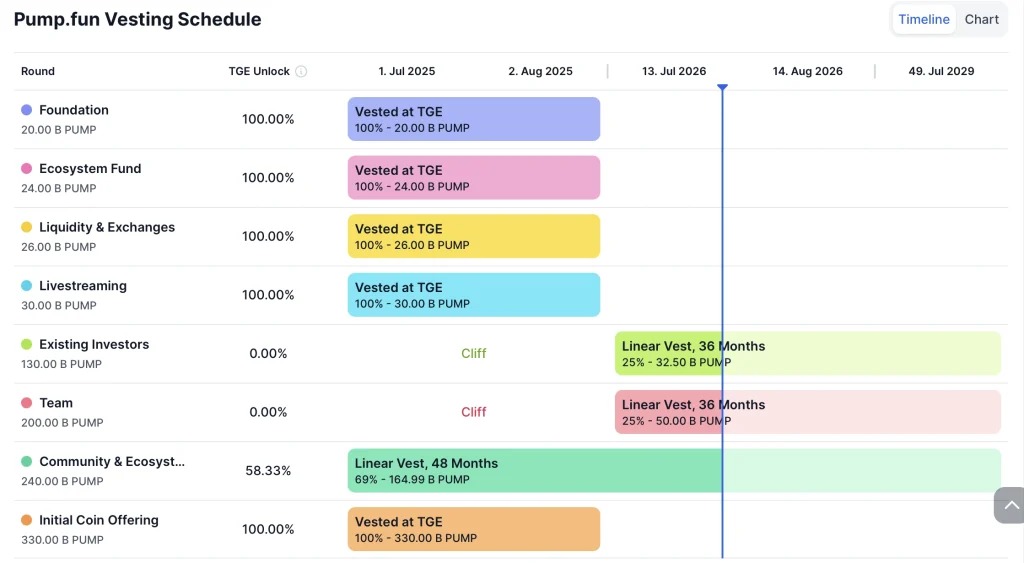
Meanwhile, Pump.fun's native token, PUMP, has surged nearly 40% in the past seven days, ranking among the top gainers in the top 100 tokens by market capitalization. The token underwent a lock-up period on July 12, releasing 82.5 billion PUMPs allocated to team members and investors, but the price action did not weaken as a result.