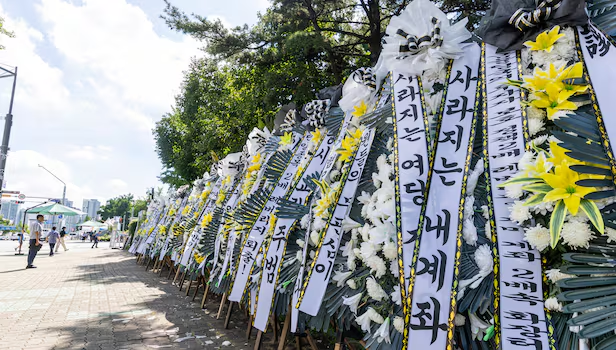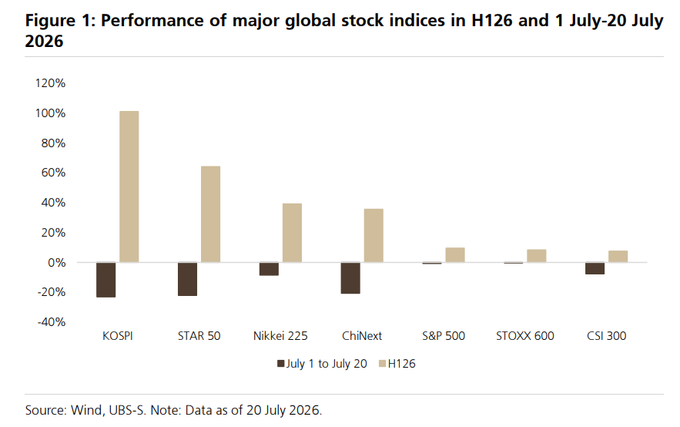


South Korean stocks initially surged this year driven by the AI chip boom, but subsequently entered a period of severe volatility. The Kospi volatility index has exceeded 60%, and the Korea Exchange has triggered circuit breakers nine times this year as of the end of July, significantly more than in the past two years.
Heavyweight stocks dominate the index
One of the core reasons for this round of volatility is the excessive concentration of index weighting. Samsung Electronics and SK Hynix have benefited from increased investment in AI servers and data centers, with their profits and stock prices rising in tandem. Including related listed companies, these companies account for more than half of the Kospi's weighting, leading to a significant bet by funds tracking the index on the AI chip supply chain.
The market structural imbalance became particularly evident in late June. The Kospi hit a record high, but more than 650 of its 831 constituent stocks actually declined, indicating that the index's rise was mainly driven by a few heavyweight stocks.
The AI infrastructure investment boom remains the direct backdrop for the rise of the two chip giants. Large sums of money continue to flow into AI platforms and data center construction, but the market is also beginning to worry that end-user revenue growth has not yet fully covered the initial investments, making related stock valuations more susceptible to sentiment fluctuations.
In late July, concerns about the rapid expansion of data centers by US technology companies intensified, coupled with weaker-than-expected earnings, causing SK Hynix's stock price to plummet by as much as 27% within three trading days. Subsequently, the stock rebounded to near the daily price fluctuation limit of the South Korean market, leading to a significant recovery in the Kospi index, demonstrating that fluctuations in heavyweight stocks have directly impacted the entire market.
Leveraged ETFs see a surge in size
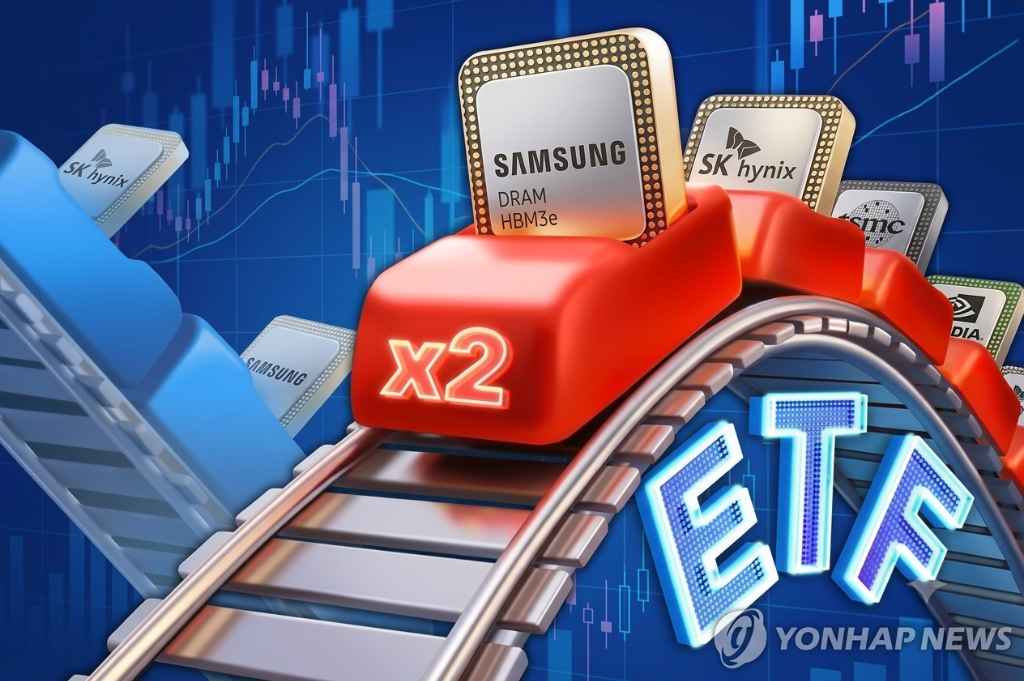
Another factor contributing to the increased volatility is the rapid expansion of leveraged ETFs in South Korea. These products amplify daily returns through derivatives and financing instruments, and their risks are typically higher than those of ordinary ETFs. In most markets, leveraged ETFs are primarily held by institutions and professional traders, but in the South Korean market, retail investors have become the main holders.
South Korean regulators had previously attempted to restrict investors from buying leveraged ETFs from overseas, but this year they approved more than a dozen leveraged ETFs tracking individual stocks such as Samsung Electronics and SK Hynix. The report, citing Goldman Sachs estimates, stated that as of the end of June, the assets under management of leveraged ETFs tracking indices and individual stocks in South Korea had risen from approximately $5 billion at the beginning of the year to over $40 billion, with about 90% of the shares held by retail investors.
At the height of trading activity, these ETFs, along with two chip stocks, accounted for over 70% of the daily turnover in South Korea's $3.4 trillion stock market, further amplifying price fluctuations. Following the market crash in late July, the South Korean government pledged to tighten retail investors' access to leveraged ETFs, including limiting the percentage of total assets that could be held in them and increasing transaction costs.
Retail investors buy to hedge against foreign capital selling off.
In terms of capital flows, South Korean individual investors have purchased over 110 trillion won worth of stocks this year, equivalent to approximately US$77 billion. This large influx of retail investor funds has not only driven up trading volume and valuations but also lowered the financing costs for leading companies, supporting their continued expansion.
In contrast, foreign investors have continued to reduce their holdings. Reports indicate that overseas fund managers have net sold approximately $115 billion worth of Kospi shares this year to reduce portfolio concentration, with SK Hynix alone accounting for over $40 billion.
The contrarian trading patterns of retail investors and foreign investors make the South Korean market more prone to concentrated trading during both upward and downward phases. Local individual investors, known locally as "ants," tend to accelerate selling during declines and concentrate buying during rallies. This trading structure, coupled with high-weighted stocks and leveraged products, has made the South Korean stock market one of the most volatile major markets globally this year.