

Foreign media reports that while Bitcoin Cash (BCH) has strengthened at times this year, recent on-chain and derivatives data have begun to weaken. Multiple indicators suggest that selling pressure is still accumulating in the market, and the risk of further price declines in the short term has not been eliminated.
$100 is considered the lower support level.
Joao Wedson, founder and senior analyst at the analytics platform Alphractal, stated that BCH is currently still between its top and bottom signal ranges and has not yet reached a clear extreme. According to this model, if the decline continues, the price may find support around $100.
Based on the trading range of approximately $200 mentioned in the article, a potential drop of about 50% would occur if the price falls back to that level. The article also notes that this assessment is a scenario projection and not a definitive conclusion.
Perpetual contracts and spot data are bearish.
From a trading structure perspective, the overall sentiment in the BCH spot and perpetual contract markets is close to neutral, but some key data points have shifted towards a bearish bias. CryptoQuant data shows that whales are placing an average order size of approximately 229.96 BCH, which, based on the price mentioned in the article, is estimated to be around $44,700, indicating that large funds are still dominating the trading.
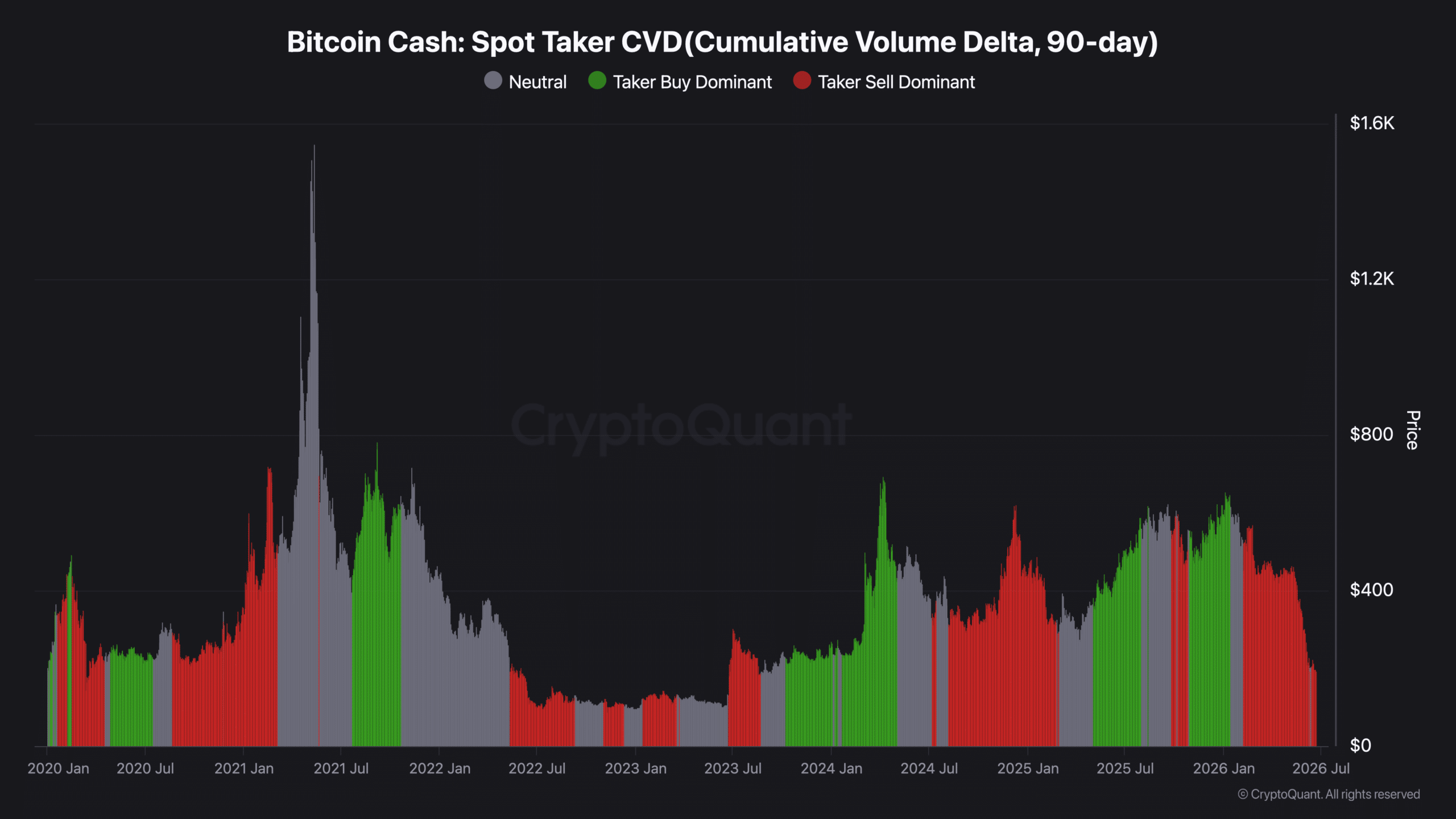
More notably, the funding rate for perpetual contracts has turned negative, at -0.0028%. This typically indicates that short positions are dominant, and the market is more inclined to bet on further price declines. Meanwhile, the difference in cumulative spot trading volume shows that active selling volume consistently exceeds active buying volume, indicating that sellers dominate the spot market.
The correlation with Bitcoin has weakened significantly.
Another change comes from the correlation between BCH and Bitcoin. Data shows that the correlation coefficient on the 20th has dropped to 0.24, while in May and early June, this value was close to 1 for a long time, meaning that the two had previously moved in tandem.
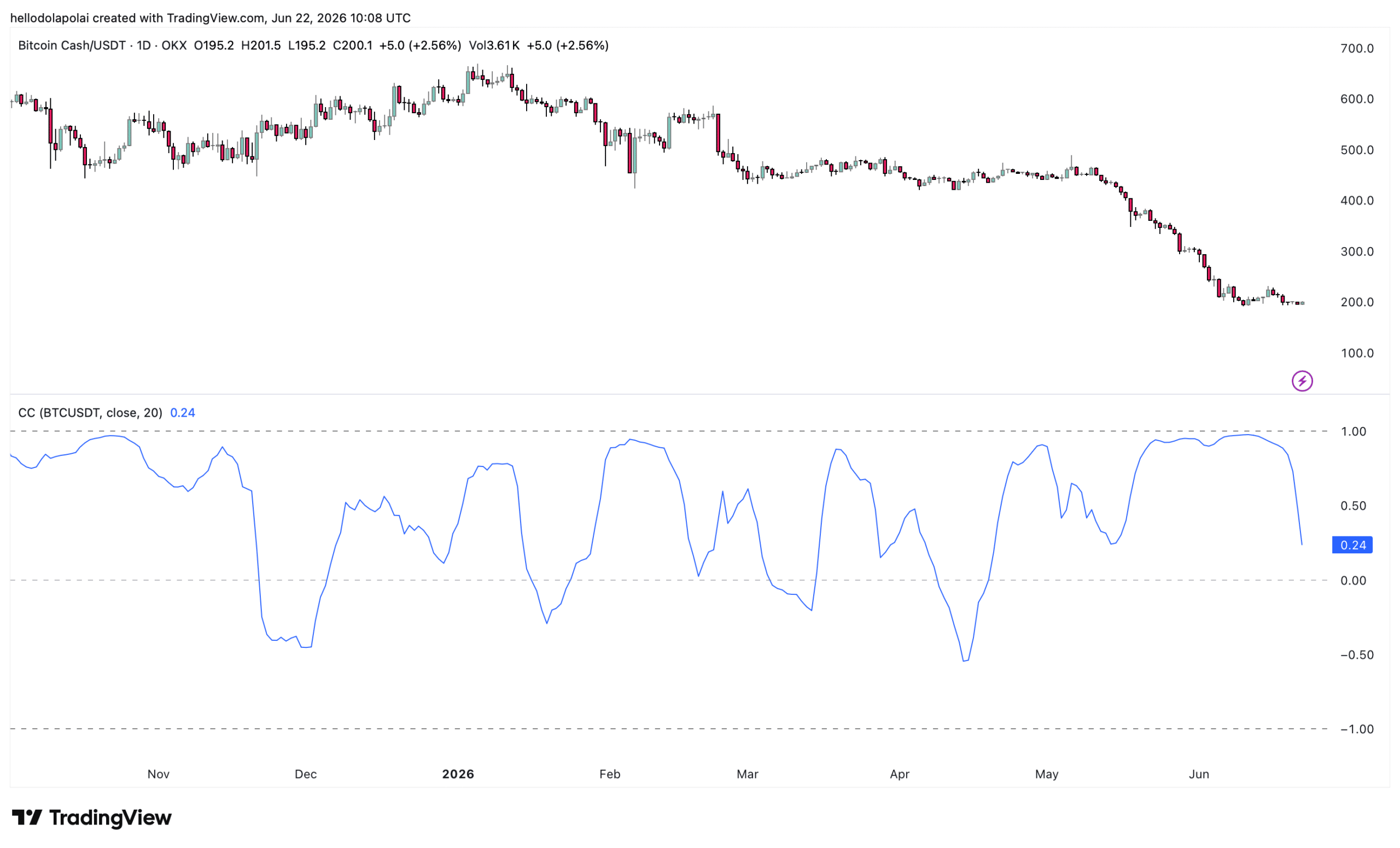
After its correlation decreased, BCH began to reflect its own trading structure more accurately, rather than simply following Bitcoin's fluctuations. The article points out that BCH has fallen from over $600 at the end of last year to around $200. If this decoupling continues, even if Bitcoin trades sideways or rises, BCH may continue to weaken independently.