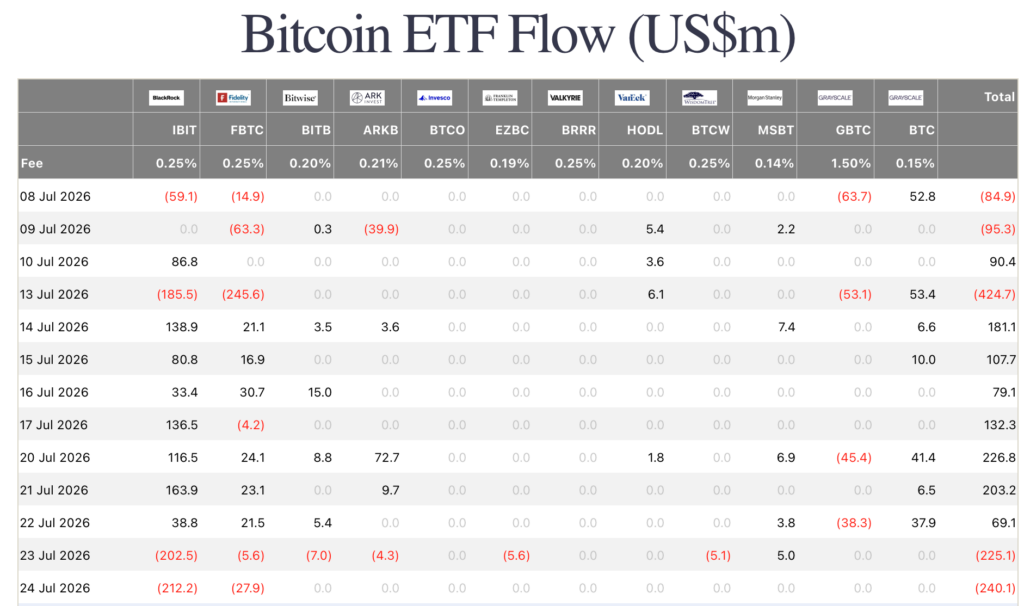
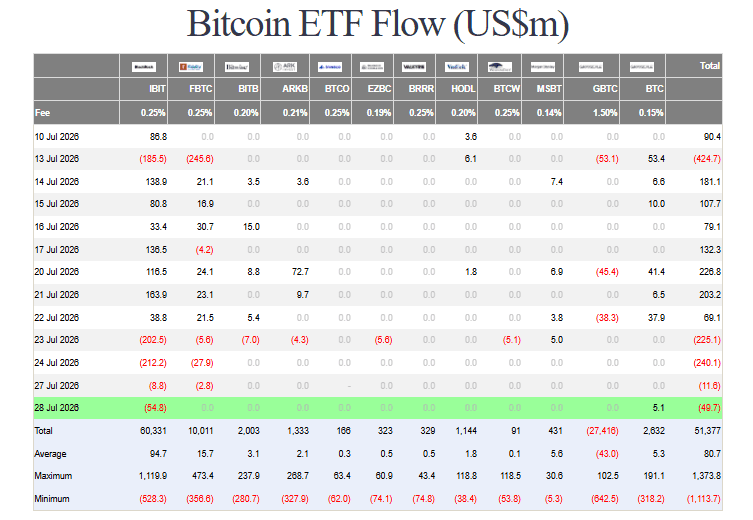
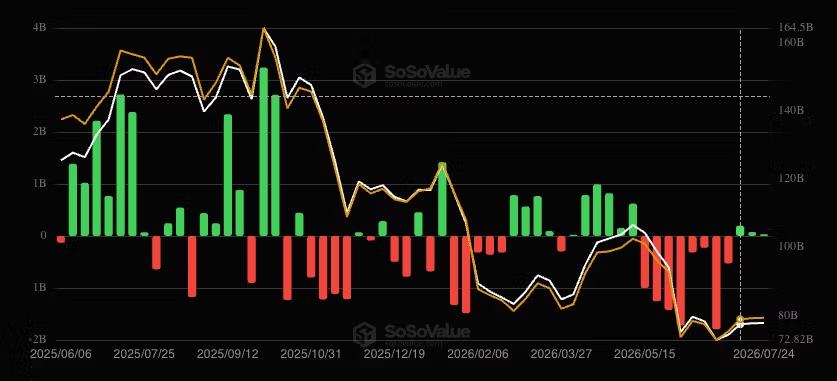
The U.S. spot Bitcoin ETF recorded net outflows for the second consecutive day, ending a seven-day streak of net inflows. According to Farside Investors data, the total outflow over the two days amounted to $465 million, almost wiping out half of the previous round of approximately $1 billion in net inflows, indicating that institutional funds have turned cautious in the short term.
IBIT saw the largest outflow.
Last Friday, US spot Bitcoin ETFs saw a net outflow of $240 million, following a $225 million outflow the previous day. Previously, these funds had seen seven consecutive days of inflows, reaching a peak of $227 million on July 20th, before demand subsequently declined.
BlackRock's IBIT was the main source of this outflow, with a combined outflow of nearly $415 million over two days. Nevertheless, supported by strong inflows in the previous few trading days, this group of ETFs still recorded a net inflow of approximately $34 million last week.
- Net outflow over two days: $465 million
- Of that, IBIT saw an outflow of nearly $415 million.
- Overall, there was a net inflow last week: approximately $34 million.
Institutional short-term positions contracted
Tim Sun, a senior researcher at HashKey, stated that this rapid reversal appears more like tactical positioning by institutions at a temporary low point, rather than sustained buying based on long-term judgment. He believes this indicates that the financial foundation for the previous rise was not solid.
He also pointed out that IBIT, with its large size and high liquidity, is typically a preferred tool for institutions when increasing their allocation to or hedging Bitcoin risks. Large outflows from this fund often indicate that some institutions are actively reducing their short-term Bitcoin exposure.
Tim Sun links this pullback to a weakening macroeconomic environment, including renewed tensions between the US and Iran, oil prices breaking through $100 a barrel, and rising market expectations for another US interest rate hike this year. He notes that this risk aversion is not limited to the crypto market; US equity funds have seen net outflows for two consecutive weeks, and the previous inflow momentum into bond funds has also been interrupted.
Markets are focused on the Federal Reserve meeting.
According to CoinGecko data, Bitcoin is currently trading at approximately $65,300, still up 1.9% for the week. However, weakening ETF inflows coupled with macroeconomic uncertainties have led the market to focus more on the Federal Reserve's interest rate decision this week.
Zach Pandl, head of research at Grayscale, previously stated in a report that Bitcoin may have already reached a temporary low if the Federal Reserve stops raising interest rates. He also downplayed the claim that the "four-year Bitcoin cycle" would inevitably see further declines in September or October.
The CME FedWatch tool shows that the market currently estimates a 34% probability of the Federal Reserve raising interest rates by 25 basis points at its July 29 meeting. This result may become a near-term variable in determining whether ETF funds will resume inflows.
Stephen Wundke, head of strategy and revenue at Algoz Technologies, believes the recent reversal is also related to Trump's signals of further action against Iran and the surge in oil prices following attacks near the Red Sea. He stated that if the situation in the Middle East eases and oil prices fall, concerns about inflation and interest rates may lessen, and ETF funds and Bitcoin prices are expected to stabilize again.