


Login

BTC
$63,106.85
-0.98%


ETH
$1,869.20
-0.57%

BNB
$578.93
-1.97%

XRP
$1.06
-0.71%

SOL
$72.92
-0.84%

TRX
$0.3281
+0.40%


HYPE
$52.33
-5.53%

DOGE
$0.06998
+0.53%

ZEC
$465.79
+1.63%

XMR
$362.92
+3.67%

LINK
$8.10
-1.89%

XLM
$0.1716
+1.06%

CC
$0.1184
-0.78%

BCH
$208.50
+0.58%

TON
$1.40
+0.47%

LTC
$44.37
-1.62%

HBAR
$0.06993
+2.73%

SHIB
$0.0{5}498
+6.87%

AVAX
$6.36
-1.37%

SUI
$0.6857
-0.39%

UNI
$4.07
-6.47%

CRO
$0.05493
+0.13%

NEAR
$1.67
+0.24%

TAO
$194.60
+0.31%

XAUT
$4,041.78
+0.06%

ONDO
$0.3899
-3.18%

BFUSD
$0.9991
-0.02%

PAXG
$4,047.07
+0.09%

OKB
$86.13
+0.91%

USDD
$0.999
+0.02%

ASTER
$0.6
+0.17%

WLFI
$0.054
-1.10%

AAVE
$91.48
-5.74%

M
$1.09
-15.48%

SKY
$0.05585
-2.38%

MNT
$0.3926
-0.73%

DOT
$0.77
+1.32%

BGB
$1.63
-0.07%

PEPE
$0.0{5}276
+0.36%

ICP
$2.07
+0.53%

JITOSOL
$94.10
-1.15%

ETC
$6.62
-0.45%

JST
$0.1041
+0.68%

KCS
$6.55
-0.51%

WLD
$0.3075
+0.49%

POL
$0.073
+1.89%

BNSOL
$81.90
-0.85%

PI
$0.0872
+7.88%

U
$1.00
-0.03%

PUMP
$0.002131
+4.46%

QNT
$62.34
+3.93%

GT
$6.50
-0.15%

MORPHO
$1.97
-0.61%

KAS
$0.02711
-1.42%

ALGO
$0.0804
+2.16%

ENA
$0.0817
-0.12%

JUP
$0.192
-0.78%

币安人生
$0.6184
-3.50%

ATOM
$1.23
-0.73%

STABLE
$0.03401
-0.56%

FIL
$0.711
-0.97%

FLR
$0.006209
-1.05%

LIT
$2.05
-5.22%

VVV
$11.86
-0.57%

XDC
$0.02648
+0.72%

INJ
$4.95
+2.23%

CAKE
$1.41
-4.02%

NEXO
$0.716
-0.69%

ARB
$0.0786
+3.01%

APT
$0.56
-0.53%

VET
$0.004734
+0.72%

DASH
$31.34
+4.15%

AERO
$0.4128
-1.71%

PENGU
$0.005971
-1.63%

VIRTUAL
$0.5474
-2.39%

SUN
$0.01789
-0.28%

TRUMP
$1.43
-0.42%

FET
$0.1417
-0.42%

CRV
$0.206
-1.15%

NIGHT
$0.01809
-1.74%

TIA
$0.3299
+3.35%

LDO
$0.3332
-6.61%

ETHFI
$0.4015
+0.20%

GNO
$105.53
-0.51%

SEI
$0.04162
-0.31%

LUNC
$0.0{4}4988
+0.87%

NFT
$0.0{6}2689
-0.19%

BTT
$0.0{6}264
+0.96%

BSV
$12.62
-0.16%

STX
$0.1363
-1.52%

BONK
$0.0{5}279
+0.00%

PENDLE
$1.41
-0.28%

DCR
$13.26
-4.47%

PYTH
$0.0395
-0.88%

MON
$0.02081
-0.57%

JASMY
$0.00444
+2.78%

JTO
$0.5056
-1.52%

ZRO
$0.736
+0.55%

CFX
$0.04222
+2.33%

IMX
$0.1098
+2.91%
BTC
$63,106.85
-0.98%
ETH
$1,869.20
-0.57%
BNB
$578.93
-1.97%
XRP
$1.06
-0.71%
SOL
$72.92
-0.84%
TRX
$0.3281
+0.40%
HYPE
$52.33
-5.53%
DOGE
$0.06998
+0.53%
ZEC
$465.79
+1.63%
XMR
$362.92
+3.67%
LINK
$8.10
-1.89%
XLM
$0.1716
+1.06%
CC
$0.1184
-0.78%
BCH
$208.50
+0.58%
TON
$1.40
+0.47%
LTC
$44.37
-1.62%
HBAR
$0.06993
+2.73%
SHIB
$0.0{5}498
+6.87%
AVAX
$6.36
-1.37%
SUI
$0.6857
-0.39%
UNI
$4.07
-6.47%
CRO
$0.05493
+0.13%
NEAR
$1.67
+0.24%
TAO
$194.60
+0.31%
XAUT
$4,041.78
+0.06%
ONDO
$0.3899
-3.18%
BFUSD
$0.9991
-0.02%
PAXG
$4,047.07
+0.09%
OKB
$86.13
+0.91%
USDD
$0.999
+0.02%
ASTER
$0.6
+0.17%
WLFI
$0.054
-1.10%
AAVE
$91.48
-5.74%
M
$1.09
-15.48%
SKY
$0.05585
-2.38%
MNT
$0.3926
-0.73%
DOT
$0.77
+1.32%
BGB
$1.63
-0.07%
PEPE
$0.0{5}276
+0.36%
ICP
$2.07
+0.53%
JITOSOL
$94.10
-1.15%
ETC
$6.62
-0.45%
JST
$0.1041
+0.68%
KCS
$6.55
-0.51%
WLD
$0.3075
+0.49%
POL
$0.073
+1.89%
BNSOL
$81.90
-0.85%
PI
$0.0872
+7.88%
U
$1.00
-0.03%
PUMP
$0.002131
+4.46%
QNT
$62.34
+3.93%
GT
$6.50
-0.15%
MORPHO
$1.97
-0.61%
KAS
$0.02711
-1.42%
ALGO
$0.0804
+2.16%
ENA
$0.0817
-0.12%
JUP
$0.192
-0.78%
币安人生
$0.6184
-3.50%
ATOM
$1.23
-0.73%
STABLE
$0.03401
-0.56%
FIL
$0.711
-0.97%
FLR
$0.006209
-1.05%
LIT
$2.05
-5.22%
VVV
$11.86
-0.57%
XDC
$0.02648
+0.72%
INJ
$4.95
+2.23%
CAKE
$1.41
-4.02%
NEXO
$0.716
-0.69%
ARB
$0.0786
+3.01%
APT
$0.56
-0.53%
VET
$0.004734
+0.72%
DASH
$31.34
+4.15%
AERO
$0.4128
-1.71%
PENGU
$0.005971
-1.63%
VIRTUAL
$0.5474
-2.39%
SUN
$0.01789
-0.28%
TRUMP
$1.43
-0.42%
FET
$0.1417
-0.42%
CRV
$0.206
-1.15%
NIGHT
$0.01809
-1.74%
TIA
$0.3299
+3.35%
LDO
$0.3332
-6.61%
ETHFI
$0.4015
+0.20%
GNO
$105.53
-0.51%
SEI
$0.04162
-0.31%
LUNC
$0.0{4}4988
+0.87%
NFT
$0.0{6}2689
-0.19%
BTT
$0.0{6}264
+0.96%
BSV
$12.62
-0.16%
STX
$0.1363
-1.52%
BONK
$0.0{5}279
+0.00%
PENDLE
$1.41
-0.28%
DCR
$13.26
-4.47%
PYTH
$0.0395
-0.88%
MON
$0.02081
-0.57%
JASMY
$0.00444
+2.78%
JTO
$0.5056
-1.52%
ZRO
$0.736
+0.55%
CFX
$0.04222
+2.33%
IMX
$0.1098
+2.91%
Market
/CORE Price

CORE
CORE

No.595
$0.01899
+4.34%
≈$0.02
Market Cap
$39.76M
Cir. Cap
$20.35M
Cir. Supply
1.07B
Cir. Rate
51.1751%
Total Supply
2.09B
Max Supply
2.1B
24h Volume
$319M
24h Vol (BTC)
6.05M
24h Turnover
29.731593%
Market Share
0.00%
Performance
Low
0.02
Range
+0.10%
High
0.02
Listing
$4.79
ATH (2026-02-01)
$6.47
-99.71%ATL (2023-02-08)
$0.01506
+26.1%Official



Converter
CORE


USD

Chart
Market
About
CORE
CORE
No.595
$0.01899
+4.34%
≈$0.02
Price
Cap
K-line
Depth
1 Minute
5 Minutes
15 Minutes
1 Hour
4 Hours
1 Day
TradingView
1H
+0.32%
24H
+4.34%
7D
-3.26%
30D
-25.99%
1Y
-96.25%
All
-99.6%
Order Book
Latest
Large Trades
Price (USDT)
Amount (CORE)
Total (CORE)
$0.01899
$0.02

AI Assistant
CORE下跌原因
CORE资金流向
CORE买卖支撑位
CORE多空比分析
CORE趋势分析
Ask AI
CORE Market
CEX Spot
CEX Derivatives
# | Exchange | Pairs | Price | +2%Depth | -2%Depth | Volume (24h) |
|---|---|---|---|---|---|---|
1 |  Hotbit Hotbit | COREUSDT | 0.018941 | $43,548.86 | $47,244.88 | 1,729 |
2 |  CoinEx CoinEx | COREUSDT | 0.018969 | $43,548.86 | $47,244.88 | 3,417 |
3 |  OKX OKX | COREUSDC | 0.01903 | $10,537.05 | $11,417.88 | 38,136 |
4 |  BingX BingX | COREUSDT | 0.019 | $43,548.86 | $47,244.88 | 47,873 |
5 |  Bybit Bybit | COREUSDT | 0.01894 | $43,548.86 | $47,244.88 | 78,881 |
6 |  Bitunix Bitunix | COREUSDT | 0.01897 | $43,548.86 | $47,244.88 | 81,626 |
7 |  gate.io gate.io | COREUSDT | 0.018978 | $43,548.86 | $47,244.88 | 95,600 |
8 |  MEXC Global MEXC Global | COREUSDT | 0.01897 | $43,548.86 | $47,244.88 | 129,363 |
9 |  Bitget Bitget | COREUSDT | 0.01894 | $43,548.86 | $47,244.88 | 171,918 |
10 |  LBank LBank | coreusdt | 0.01896 | -- | -- | 368,487 |
11 items
- 1
- 2
Rows
Token Unlock
Coming Soon
Details
Next Unlock
--
Unlock Amount
Unlock Value
Total Supply %
Unlock Progress
Total Supply
Ratio
Amount
Distribution
Total Supply
Unlock Schedule
Day
Week
Month
Show MC
Show Price
Unlock Event
After Today
Unlocked
Expand All
# | Unlock Date | Unlock Amount | Unlock Value | Total Supply % | Unlock Details |
|---|---|---|---|---|---|
No Data | |||||
About CORE
1. What is the core positioning and market status of CORE?
CORE is the native utility and governance token of the Core blockchain, an EVM-compatible Layer 1 built on Bitcoin infrastructure. It has a maximum supply of 2.1 billion tokens with a hard cap similar to Bitcoin, following a scarcity-driven value model. As of late 2024, its circulating supply stands at approximately 1.24 billion tokens with a market capitalization in the hundreds of millions of dollars, positioning it as a leading Bitcoin DeFi ecosystem.
2. Who founded and supports the Core project?
Core was developed by CoreDao, a global team of developers and computer scientists founded in 2022 and based in Lisbon, Portugal. The project has attracted a large community with over 1.6 million Twitter followers and more than 74,000 Telegram members. Brendon Sedo is recognized as an initial contributor. The organization operates as a decentralized autonomous organization focused on advancing the Core blockchain ecosystem.
3. What major milestones and partnerships has Core achieved?
Core launched its mainnet in 2023 and achieved remarkable growth in 2024, reaching $1 billion in Total Value Locked. Key partnerships include BitGo for digital asset custody, Alchemy Pay for fiat-crypto accessibility, and ZAN (an Alipay-affiliated company) as a validator. The project also launched the Core Commit program offering $75,000 in CORE tokens plus mentorship and venture capital access for developers building on the chain.
4. What is Core's technical architecture and consensus mechanism?
Core employs the Satoshi Plus consensus mechanism, a tripartite system that integrates Delegated Proof of Work, Self-Custodial Bitcoin Staking, and Delegated Proof of Stake. Through this mechanism, Bitcoin miners, Bitcoin stakers, and CORE token holders delegate resources to elect 31 validators who secure the network. Each round lasts one day, with 3-second block slots and on-chain governance for parameter adjustments.
5. What are the tokenomics and supply details of CORE?
CORE has a maximum supply of 2.1 billion tokens with a Bitcoin-like hard cap that creates scarcity. The token serves multiple functions: gas fees for transactions, governance voting rights, and network incentives for validators and stakers. Dual Staking allows Bitcoin holders and CORE stakers to earn yield while contributing to network security. Circulating supply is approximately 1.24 billion tokens.
6. How does Core's governance system work?
Core follows a three-phase progressive decentralization strategy. Stage 1 involved off-chain governance through Community Improvement Proposals. Stage 2 (current) enables partial on-chain governance including on-chain parameter adjustments and voting on economic variables. Stage 3 aims for full on-chain governance where all functions are governed through on-chain voting with collateral requirements for proposals to ensure proposers have a vested interest in network health.
7. What are the use cases and ecosystem applications of CORE?
Core positions itself as the Proof of Stake Layer for Bitcoin, enabling the first implementation of non-custodial Bitcoin staking for yield. Its EVM compatibility supports a full BTCfi ecosystem including DeFi protocols, decentralized applications, and on-chain governance. Bitcoin holders can earn yield without relinquishing custody of their assets, while developers can build dApps using standard Ethereum tooling. The ecosystem aims to bring DeFi capabilities to the Bitcoin network.
Order Book
Latest
Large Trades
Price (USDT)
Amount (CORE)
Total (CORE)
$0.01899
$0.02
66%
33%
Bullish
Bearish
Community

SOL I don't understand
 Follow
After reviewing the expenditures of the six major companies, what I want to say isn't that big companies are burning through cash again.
Rather, the market's assessment of AI is shifting from one question to another:
Previously, the question was:
"Will AI capital expenditures be too high?"
Now, the question is:
"If we don't continue investing, will our computing power be insufficient?"
This is the core reason for the recent strong rebound in storage, HBM, and semiconductors.
Several changes make this clear.
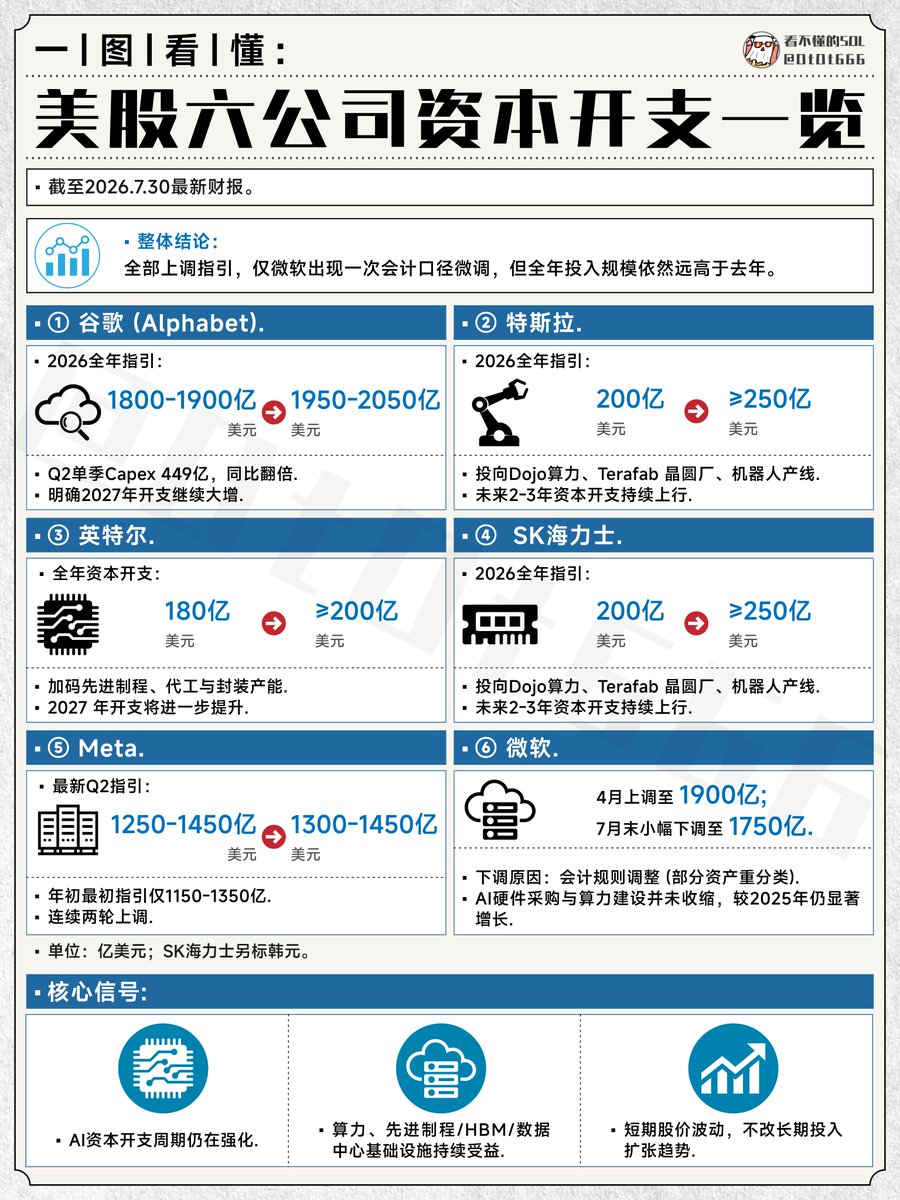
Google raised its 2026 Capex guidance from $180-190 billion to $195-205 billion.
Meta initially only gave $115-135 billion, but subsequently revised it upwards, and it's now at $130-145 billion.
Intel continues to increase its investment in advanced process technologies, foundry services, and packaging capacity.
Tesla is also continuing to invest in Dojo computing power, robotic production lines, and factory expansion.
While Microsoft slightly lowered its full-year capital expenditure forecast from $190 billion to $175 billion due to accounting adjustments, the key point isn't that it's stopped investing, but rather that its investment in AI hardware and computing power hasn't shrunk; the overall scale of investment remains far higher than last year.
This illustrates one point:
The AI capital expenditure cycle is still being forcibly pushed forward.
Moreover, this round of investment isn't simply about buying a few GPUs.
Behind an AI data center lies an entire industry chain:
GPU/ASIC chips
HBM high-bandwidth memory
Server DRAM
Enterprise-grade SSDs
Advanced packaging
Optical modules
Power equipment
Liquid cooling
Data center land and power grid
So why has the storage sector rebounded so strongly recently?
Because the market suddenly realized:
If cloud providers continue to expand AI data centers, then storage demand is unlikely to cool down quickly.
Companies like Micron, SK Hynix, and Samsung are no longer just traditional DRAM cyclical stocks.
They are now more like "capacity sellers" in the AI infrastructure chain.
GPUs are responsible for computing.
HBM (Hardware Bus) feeds the data.
DRAM handles the operation.
SSDs store the data.
The larger the data center, the more exorbitant the storage consumption.
Previously, the storage industry focused on smartphones, PCs, and inventory cycles.
Now it's different.
Now we need to look at:
Google Cloud growth;
Microsoft Azure growth;
Meta data center expansion;
Tesla robotics and self-driving technology;
AI inference throughput;
HBM supply and demand gap;
Enterprise-grade SSD prices.
This is why storage stocks rebound so sharply.
Because the market was previously focused on two expectations:
First, whether the AI caps had peaked;
Second, whether the storage price surge would end.
Now, with the release of major companies' earnings reports and guidance, the market has discovered: money is still being poured in, demand is still there, and capacity expansion hasn't stopped.
Therefore, the previously suppressed storage valuations will quickly recover.
But investors should remain calm.
A sharp rebound doesn't mean there are no risks.
The biggest problem in the AI hardware chain right now isn't a lack of compelling narratives, but rather overly optimistic expectations.
If cloud providers slow down their Capex projections, or storage prices stall, stock prices will likely plummet.
Therefore, my focus in this sector isn't on whether to chase it or not.
The key is to look at three things:
Are major vendors continuing to revise their Capex projections upwards?
Are HBM/DRAM/SSD prices continuing to improve?
Can cloud revenue prove that the money spent isn't wasted?
If all three remain intact, the storage theme hasn't been disproven.
If any one of these weakens, you need to reassess your position.
This storage rebound, superficially a stock price correction, is actually driven by the ongoing global AI capital expenditure cycle.
Short-term prices are driven by sentiment.
Mid-term prices are driven by rising prices.
Long-term prices depend on whether AI data centers can sustain their expansion.
 445
445 0
0 0
0 33
33

Mars Finance
Follow25-Year-Old OpenAI Prodigy Dragging Global Stock Market Investors Down with Him
Leopold Aschenbrenner, a former core member of OpenAI, founded the hedge fund Situational Awareness at the age of 25. He heavily invested in AI hardware stocks and operated with high leverage, achieving a 439% return in six months and managing nearly $45 billion in assets. However, the fund collapsed due to a forced liquidation triggered by a sharp drop in AI tech stocks. His heavily invested hardware stocks, such as SK Hynix and Micron, fell by more than 35% in a single month, while the software stocks he shorted rebounded. Ultimately, Citadel acquired $16 billion of his holdings at a drastic price, highlighting the enormous risks of high-leverage betting on a single trend.
 3650045
Lava Network 🌋
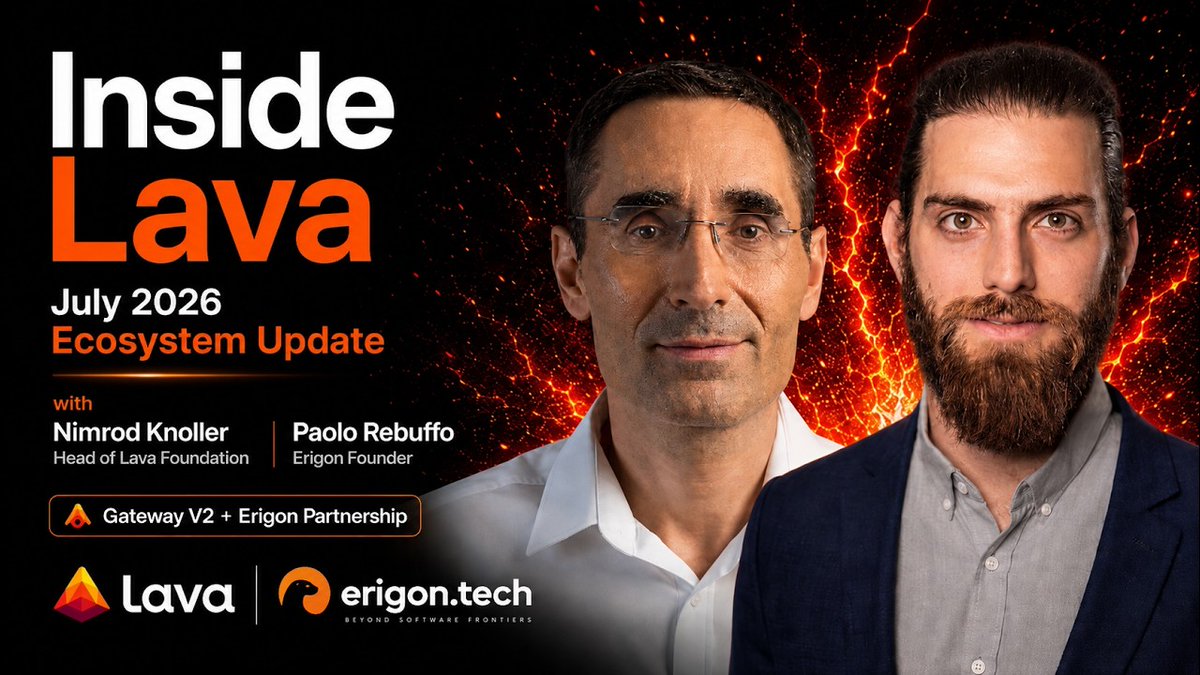
FollowJuly Ecosystem Conference Call 🌋
• RPC fees hit a record high of approximately €25,000, a 38.7% increase month-over-month.
• Gateway V2 has been released, supporting self-registration and Stripe payments with a seamless process.
• A partnership with @ErigonETH was announced. Paolo Rebuffo will be present to discuss Ethereum archiving infrastructure and zero-knowledge proofs (ZK).
Revenue growth. Product release. Ethereum core contributors also attended the call.
 3850032
Raoul Pal
FollowIf you want to survive in the cryptocurrency space, you must accept its true nature.
You will experience 35% pullbacks, even 50% drawdowns.
But if you truly understand the assets you hold, these are insignificant.
Your core holdings should be a few truly long-term value networks that are widely accepted. If you do this right, drawdowns are no longer frightening; they become crucial.
Because this is a long-term battle. I believe these networks will become a retirement safety net for an entire generation. You can't achieve this through trading. You need to build an investment logic, accumulate continuously, reserve some funds to cope with large sell-offs, and then let time and widespread adoption work.
Volatility is a necessary price to pay for entering this space. Ultimately, those who succeed are those who are no longer afraid of volatility.
4180021
zhao
FollowI've been following TRON DeFi Summer S1 closely these past few days, and it's clear the event is entering its final sprint.
Core asset pools like TRX, JST, SUN, and USDD still offer Boosted APR incentives. You can directly view participation methods and real-time yields for different asset pools by accessing #JustLendDAO through @binancezh Wallet DeFi.
Currently, the highest Boosted APR reaches 62.61%, and there's a $2.15 million prize pool waiting for users to participate in.
For users who already hold these assets, it's a good time to learn more before the event ends and choose pools that suit your strategy. 🌊
@trondaoCN @SUNWUKONG_ZH @usddio_cn
@justinsuntron @TRONDAO #TRONEcoStar
 3220021
Filecoin TL;DR
FollowThe "Export" button only covers one of the eight layers that constitute true data portability.
In short: the "Export" button only covers one of the eight layers of data portability.
WM Technology paid $2.3 million for unused AWS capacity.
Filecoin CID proves the data has not been tampered with, while Onchain Cloud covers the rest.
1/ Illusion
Based on the framework built by standard institutions and enterprise architectural practices, the "Export" button only covers one of the eight different layers that constitute true data portability.
Most companies stop here, believing the whole problem is solved.
2/ Cost
WM Technology, the parent company of Weedmaps, reduced its AWS usage to below the contractual minimum in fiscal year 2025, and therefore set aside $2.3 million in loss reserves, as disclosed in its financial filings.
It paid for the capacity it had already optimized for on AWS.
3/ Who Said?
Security researcher and author Bruce Schneier wrote on his blog in December 2025, “When you own and control highly intact data storage,” external systems cannot manipulate a company’s perception of its own information.
4/ Where Exports Fail
Even complete data exports can fail at layer 5 of the eight-layer framework: verifying that the transmitted bytes have not been tampered with.
Most cloud exports lack built-in verification mechanisms, relying entirely on trust in the provider rather than solid evidence.
5/ What Filecoin Addresses
The Content Identifier (CID) built into the Filecoin protocol addresses this deficiency.
A CID is a cryptographic hash of the data itself, so any file retrieved after any transfer can be compared to the original without relying on any promises from the provider.
6/ Achieving the Goal
Portability requires passing all eight layers of verification within the framework.
The core of Filecoin Onchain Cloud lies in its identifiers, standard interfaces, and pricing; these are the cornerstones of the company's business, not a seemingly legitimate but actually vulnerable export button.
Beyond a simple export function:
 3540021
zhao
FollowRecently, the most noticeable thing about the TRON ecosystem is that DeFi Summer S1 is entering its final sprint.
Core asset pools such as TRX, JST, SUN, and USDD are still retaining Boosted APR incentives. You can check the real-time status of different asset pools by accessing #JustLendDAO through @binancezh Wallet DeFi.
The current highest Boosted APR is 62.61%, and there's also a $2.15 million prize pool waiting to be shared by participating users.
For users who already hold these assets, it's advisable to pay close attention to the event's progress during this period, understand the risks and rules, and choose a participation method that suits you. 🌊
@trondaoCN @SUNWUKONG_ZH @usddio_cn
@justinsuntron @TRONDAO #TRONEcoStar
 3350022
Chain Research Institute | AI First 🔶💧
FollowThe most surreal aspect of this AI earnings season is how the market is repricing several giants. The same massive AI bets are being treated drastically differently.
$MSFT $AMZN
After the market closed on July 29th, Microsoft's stock rose 9% after releasing its earnings report. On the same day, Meta's stock fell as much as 8.3% after its earnings report. Both companies are pouring money into AI, yet the treatment they receive is worlds apart.
I've been watching these earnings reports for two days, and my conclusion is straightforward: the market no longer cares who's betting heavily on AI. The narrative of 2023, where anything related to AI would rise, is over. Now, the market only asks one question: does your AI strategy make sense?
I. The Pricing Logic Has Changed: From Narrative to Accounting The old logic was simple. You said you were going to do AI, and the market would give you a valuation. It was a competition of who could shout the loudest and who could invest the most.
Now it's different. Microsoft, Google, Meta, and Amazon all released their reports in the same week, with capex in the hundreds of billions, yet their reactions were completely different. The market only cares about one thing: whether the money was well spent and whether it can be recouped.
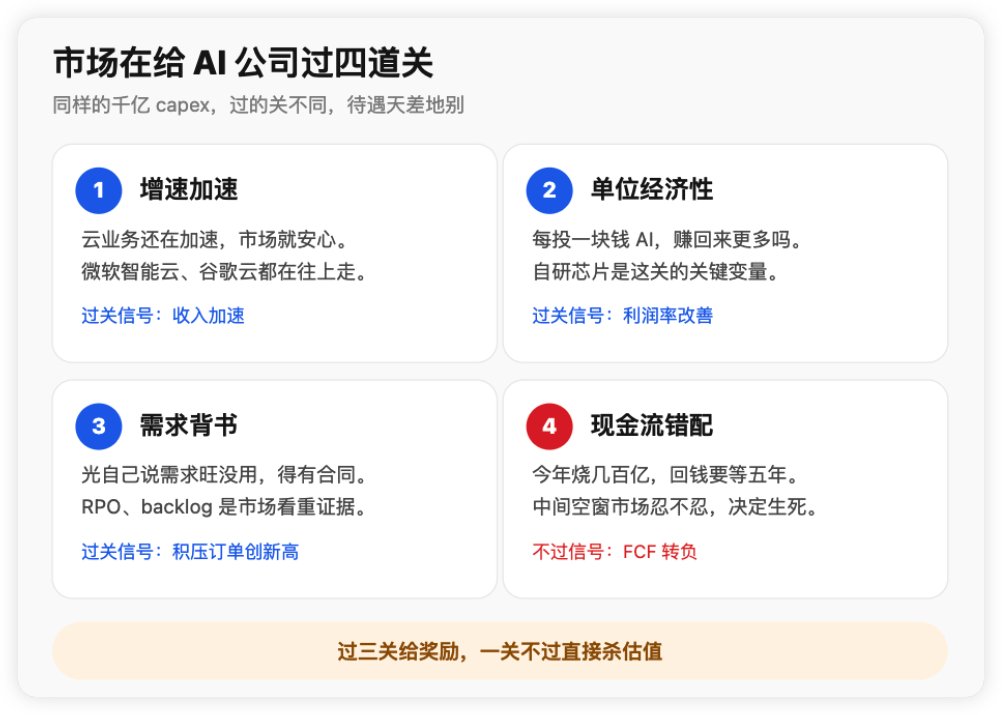
I break down the market's reaction; it's actually going through four hurdles:
First, has the growth rate accelerated? If cloud business is still accelerating, the market is reassured. Microsoft's intelligent cloud and Google Cloud are both exceeding expectations in growth, providing confidence.
Second, has unit economics improved? For every dollar invested in AI, is the return more than before? Self-developed chips are a key variable in this hurdle, which I'll discuss later.
Third, is there external support for demand? Simply saying demand is strong isn't enough; there must be contracts. RPO (Residual Performance Obligation) and backlog are the most valued evidence by the market.
The fourth hurdle is hidden underneath: can the timing mismatch of cash flow be controlled? If you burn through tens of billions this year, and the cash won't be returned for five years, can the market tolerate that gap? Google's penalty stemmed primarily from questions surrounding this hurdle.
Passing three out of four hurdles earns a reward. Failing even one results in a direct valuation drop.
II. Three living examples: Different hurdles passed, different treatment.
Microsoft passed three hurdles.
Azure's growth is accelerating, and RPO backlogs are hitting new highs, proving that enterprise AI demand is genuine. Even more ingeniously, Microsoft adjusted its capex accounting, extending building depreciation from 15 years to 25 years and shifting some leases from financing to operating. The market interprets this as proactive cash flow management; while capex figures appear lower, actual investment hasn't stopped. Demand exists, and the accounts are clear, leading to a 9% after-hours rise.
Google passed two and a half hurdles.
Google Cloud grew 82% year-over-year, with its backlog reaching $514 billion, making it the most successful at validating demand. However, its quarterly capex surged to $44.9 billion, and its full-year guidance was revised upwards to $195 billion to $205 billion, causing free cash flow to turn negative to -$5.86 billion. The market initially fell by about 4%, concerned about cash flow mismatch. But its demand was genuine, so it wasn't severely impacted.
Meta failed to pass any hurdle.
Second-quarter revenue was $60.8 billion, a 28% year-over-year increase, which looks good. But free cash flow was only $784 million, a sharp 91% year-over-year drop. Net profit was $15.8 billion, a 14% year-over-year decline. Capex continued to rise, with full-year guidance at $130 billion to $145 billion. Most critically, the AI investment didn't generate incremental revenue in its core business, and the two return paths of computing power rental and enterprise services hadn't yet proven successful. The market voted with its feet, with the stock falling 8.3% in after-hours trading.
The same AI story: Microsoft was seen as the right solution, while Meta was seen as a gambler. The difference lies in how robust the financial statements are.
III. The Significant Difference in Payback Periods: Self-Developed Chips are the Watershed. The market is scrutinizing financial statements, with a key metric being the payback period.
Third-party calculations show Google Cloud's payback period is approximately 2.5 years, AWS about 4 years, and Microsoft about 6 years. Where does this difference come from? The core lies in self-developed chips.
Unit computing power cost: GB200 is approximately $2.28 per GPU-hour, Google TPU v7 is approximately $0.96, and Amazon Trainium3 is approximately $0.78-$0.86. Google and Amazon develop their own chips, reducing costs and achieving faster payback. Microsoft heavily relies on Nvidia, suffering cost disadvantages and experiencing slower payback.
This is why the market is more tolerant of Google than Meta. Google's self-developed stack can justify its cost reduction strategy, while Meta's computing power is largely purchased, burning money without demonstrating profitability.
IV. Which Types of Companies Are Favored?
By reviewing the seven companies, the characteristics of those currently favored by the market are quite clear.
First, verifiable demand. They have cloud backlog, RPO, and large customer contracts. Google Cloud's $514 billion backlog is the best safeguard.
Second, improving unit economics. Either they are reducing costs through self-developed chips (Google, Amazon), or their cloud business profit margins are increasing (Microsoft, Google Cloud profits have tripled).
Third, those selling shovels are the most stable. Nvidia basically doesn't have a capex burden; customers borrow money to buy its cards, and it directly collects payment. It's the most favored in this round, with the simplest logic.
Fourth, controllable cash flow mismatch. They dare to burn money, but the market can see the recovery path, and the timing mismatch shouldn't be too outrageous.
Conversely, the characteristics of those not favored are also obvious. Heavy asset investment with an unverifiable return path (Meta's current predicament), pure cash burning without visible revenue growth, or like Apple, AI investment being eroded by hardware price increases and consumer apathy.
SpaceX and Musk's approach is different. Acquiring Cursor, leasing computing power, and integrating xAI, they follow a vertically integrated route of computing power, applications, and terminals, neither building a general-purpose cloud nor commoditizing models. The market hasn't yet given it a clear pricing anchor; it's more like betting on whether Musk can succeed.
V. A Major Overlooked Risk: Off-Balance Sheet Leverage (The part beneath the iceberg)The seven major AI companies' ASC 842 operating lease commitments total approximately $1.2 trillion, which are off-balance-sheet liabilities. Microsoft shifted some leases from financing to operating, seemingly reducing capex, but the off-balance-sheet commitments actually rose to $329.1 billion. The current cash flow pressure may only be the tip of the iceberg.
The commoditization of AI models is also changing the rules. Open-source models are catching up with closed-source ones; DeepSeek-V4-Pro scores 65.1 overall, GPT-5.4 scores 67.3, prices have dropped 1000 times, and usage has increased 10,000 times. Those who truly profited from this wave were those selling computing power and building cloud infrastructure. Those who bought models missed out.
This earnings season clarifies one thing: AI is no longer a magic buzzword that can cover up everything. The market is starting to examine the fundamentals.
If you can demonstrate demand, explain cost reduction, and make cash flow mismatches manageable, prices will rise. If you can't prove it, no amount of money can change the fundamental problem.
For the next few quarters, just keep an eye on three things: the backlog of cloud orders, whether prices are still rising, whether self-developed chips can reduce costs, and whether free cash flow can avoid becoming a major deficit. If these three things pass, the company will be viewed favorably. If they don't...
 4250039
zhao
Follow#Web3AI #CryptoTools #Web3
AiTraceRoot Receives Media Attention and Coverage! 📰
We are building an AI-driven on-chain data analytics infrastructure for the entire BNB Chain ecosystem.
The platform aims to solve core pain points in the industry, including low data filtering efficiency, chaotic market information, and excessive misleading content.
View Media Coverage:
Product Demo:
#AiTraceRoot #CryptoPR
 4650026
Doctor Profit 🇨🇭
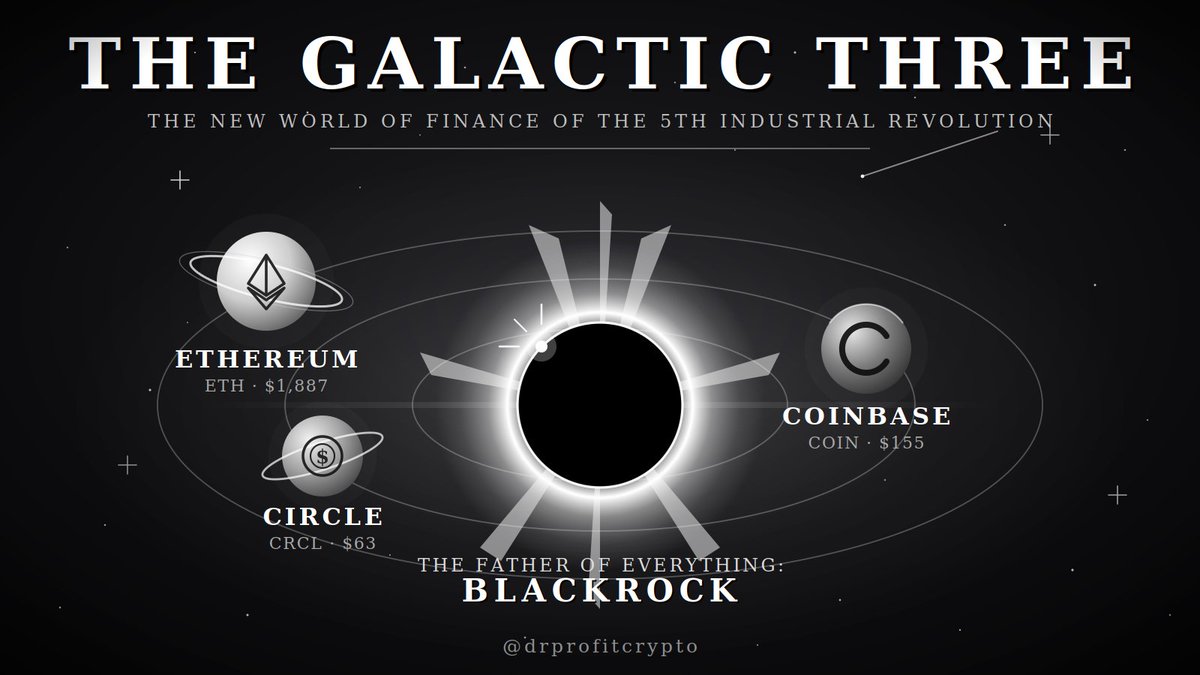
FollowThe Three Giants of the Galaxy
A Tremendous Shift in the Global Landscape
The investment world has always followed a brutal yet simple rule: whether you buy an asset early or identify an undervalued sector. Once you understand this rule and find an industry that will lead the way for decades to come, you can no longer ignore it. Today, the world is betting on artificial intelligence, but everyone seems to be overlooking the biggest transformation we face—the reshaping of the financial landscape. The financial industry is about to undergo unprecedented change, and this is part of the Fifth Industrial Revolution. In my view, the Fourth Industrial Revolution was accompanied by the rise of social media, the World Wide Web as we know it today, and e-commerce. The Third Industrial Revolution was the dot-com bubble, the internet, and the birth of the mobile phone. The Second Industrial Revolution was the era of electricity, steel, and the internal combustion engine. The First Industrial Revolution was marked by the advent of the steam engine, which brought us railways and trains. From the first cryptocurrency revolution to today's fifth revolution, approximately 260 years have passed. In each revolution, new technologies replaced old ones, and those who adopted new technologies ultimately succeeded, while those who clung to old methods, rebelled against or rejected new things ultimately failed.
2. The Three Giants
I am very bullish on the three giants: Circle, Coinbase, and Ethereum (ETH). Circle is the world's largest regulated stablecoin issuer. Coinbase is the world's largest cryptocurrency custodian and the largest cryptocurrency exchange in the United States. Ethereum is the world's largest smart contract and tokenization network. The foundation for the next generation of cryptocurrency and finance is already there, right before our eyes, and I am full of confidence in it. The reason is simple: once you truly understand this structure, you will understand. This argument is almost impossible to ignore. BlackRock proclaims itself the father of everything: every asset, every market, every major pool of funds in the world. Since the launch of cryptocurrency ETFs, this "father of everything" has also become the new "father" of cryptocurrency. Not only the father of Bitcoin, but the father of the entire cryptocurrency system. The three companies and assets most closely associated with this "father" are precisely the "galactic giants": Circle, Coinbase, and Ethereum. All my personal buy and sell orders, portfolio planning, and trading strategies are exclusively available to premium members. I will share in real time whenever I invest; I will also share in real time whenever I sell. This is exclusive to premium members. Learn more:
3. The Problem with Bitcoin:
The problem with Bitcoin is this: Don't get me wrong, I'm not bearish on Bitcoin; I'm still very bullish on it. But in this cycle, I've decided to hold 60% Ethereum and 40% Bitcoin. All the reasons are in this report. Currently, BlackRock can do almost nothing about Bitcoin except sell its exposure by packaging it into an ETF. There's no traditional business model behind Bitcoin, and no CEO. They can't just call Bitcoin and demand change. For people like Larry Fink and Wall Street, this makes Bitcoin a relatively boring asset. Yet, BlackRock is still heavily betting on Bitcoin, and IBIT has become the most successful ETF launch ever. Remember this carefully, because now you'll understand how this "problem" is solved, why Bitcoin is so important to BlackRock, and why the final outcome may not be what most people want. On July 23, BlackRock, Coinbase, Fidelity Investments, Strategy, and five other giants formed the Bitcoin Security Consortium, pledging $15 million over three years to provide Bitcoin with quantum-resistant protection. Meanwhile, Coinbase's own research estimates that 20% to 50% of all Bitcoin held in older wallet formats may be at risk of future quantum attacks. BlackRock has already listed quantum computing as an official risk factor in its ETF filings. Now, let's think further. Upgrading to quantum attack protection will be one of the most complex changes Bitcoin could face. Proposals such as BIP-360 already exist, and if the upgrade process is controversial, it could ultimately lead to a hard fork: creating two different Bitcoins. This has happened with Bitcoin Cash. So, if Bitcoin splits, which chain will the ETF track? BlackRock decides. The chain tracked by IBIT will immediately become institutional Bitcoin. The other chain will have no BlackRock backing, no ETF inflows, no reliable institutional support, and will be vulnerable to quantum attacks at any time. So, who will hold the unprotected, unsupported "original" Bitcoin? Nobody. The consortium officially claims it will not participate in Bitcoin governance. Of course, they will say that. The reality is that the Bitcoin community is slow and inefficient, Bitcoin Core development has been slow, and now, a foundation-like structure backed by the world's largest asset management company is developing a quantum-resistant Bitcoin. Meanwhile, miners are scattered across different continents, lacking communication, each operating their own decentralized business without any real cooperation or coordination. Then, Larry Fink, the father of the US dollar, stepped in and took over. He protects Bitcoin from quantum computer attacks, and in return, you use his Bitcoin. His Bitcoin operates under his institutional rules. This is why an asset that BlackRock could never directly control eventually found a "father." Connected to this entire structure are: Coinbase, holding ETF tokens; Circle, operating on reserves managed by BlackRock; and Ethereum, carrying the tokenization infrastructure. These three giants are so large that almost no one can fully understand what's happening around them. Today's update: We witnessed another hardware wallet security vulnerability today, and this will likely become the norm in the future.New technologies will eventually replace old ones, which is why the Bitcoin algorithm will need to be updated in the future.
4. Coinbase: Custodian of BlackRock's Bitcoin
Coinbase Custody is the primary custodian of BlackRock's IBIT. Read it again: the world's largest Bitcoin ETF has its underlying tokens actually custodied by Coinbase. BlackRock chose Coinbase from the beginning, not only for custody but also for access to spot market price data. When Wall Street buys Bitcoin, Coinbase holds those Bitcoins. Moreover, this partnership extends far beyond BlackRock. The vast majority of US spot Bitcoin and Ethereum ETF issuers choose Coinbase as their custodian, meaning that almost the entire ETF industry is stored in Coinbase's vault. Now let's talk about its connection to Circle, because this is where the whole structure becomes incredibly intricate. Coinbase holds equity in Circle and receives a share of the interest income generated from USDC reserves. Furthermore, Coinbase receives all the interest generated by USDC directly held on its platform. Every time USDC grows, Coinbase profits. Every time Circle profits, Coinbase also profits. Don't think of them as competitors; they run on the same machine. Coinbase has also built its own blockchain, Base, which has become one of the world's largest Layer 2 networks. And where does Base ultimately end up? Ethereum. Therefore, Coinbase is also directly funding the third member of the "Galactic Trio"—Ethereum. One company connecting every aspect of the system. Do you understand this connection? Do you understand how the sun and moon work? Everything fits perfectly; that's the Galactic Trio! Today, Coinbase is trading at around $155. The stock price is currently down about 60% from its previous high of $402, and at the same time, the company is building what I call a "universal exchange": offering tokenized stocks and options trading through the acquisition of Deribit, the world's largest crypto options platform, and launching an AI advisor registered with the U.S. Securities and Exchange Commission (SEC), USDC credit cards, and a MiCA license authorized to serve the entire European Union. But the tokenized stock business is the most important, because it's here that the connection between BlackRock, Ethereum, Circle, and Coinbase becomes undeniable.
5. Ethereum: A New World of Finance
When BlackRock launched its tokenized treasury fund, BUIDL, it chose to list it on Ethereum first. BUIDL's assets under management have exceeded $2.5 billion, and it has distributed over $100 million in dividends since its inception. Larry Fink has repeatedly stated publicly that the ultimate goal is the tokenization of all assets, including stocks, bonds, funds, and real estate. Data also confirms this vision: Ethereum's RWA (Risk-Weighted Asset) is worth approximately $16.6 billion, accounting for more than half of the entire tokenized asset market, with a year-on-year growth of 315%. BNB Chain's RWA is $3.6 billion, and Solana's is $2.5 billion. Ethereum's RWA is four and a half times that of its closest competitor, and the answer you need to know is: BlackRock CEO Larry Fink chose Ethereum.
I will discuss DTCC in more detail later in this report, but here's a brief overview: DTCC is the settlement pillar of the US capital markets, holding over $114 trillion in US securities. In 2026, DTCC received approval from the U.S. Securities and Exchange Commission (SEC) to tokenize Russell 1000 index constituents, including the entire S&P 500 and all major Nasdaq constituents, as well as major index ETFs and U.S. Treasuries. Companies like BlackRock, Goldman Sachs, and JPMorgan Chase participated. The core platform runs on the Ethereum client Besu, meaning Wall Street's underlying architecture is being rebuilt on Ethereum technology and standards. The process is simple. Currently, when you buy stocks, your broker sends an order, DTCC updates its database, and settlement takes a day. In the tokenized version, the process will change. Stocks will become tokens, transfers will occur on-chain, and settlement will be instantaneous. This infrastructure uses the language of Ethereum, so regardless of whether banks and custodians plan to integrate, they are building Ethereum-compatible infrastructure. Since EIP-1559 in 2021, a portion of every transaction fee on Ethereum has been burned and permanently lost. This upgrade predates ETFs, BUIDL, and DTCC by three years. The mechanism was already in place, but its true significance is only just beginning to emerge. Tokenized stock market changes hands: it's like Visa burning a portion of its own stock with every transaction. No other stock on Earth has this structure, and this only leads to a continuous price increase.
Ethereum underperformed in the last cycle due to a lack of regulatory clarity regarding its future. This is precisely why I avoided investing heavily in Ethereum in the last cycle, focusing primarily on Bitcoin. Remember the example of Ripple. Due to the shadow of litigation from the U.S. Securities and Exchange Commission (SEC), XRP barely performed in the 2021 bull market. Once the legal storm began to dissipate, I heavily invested in XRP, making it my second-largest investment after Bitcoin in the last cycle. I've spoken publicly about this and written several reports explaining why I bought XRP at $0.30 at the time. In the 2024 and 2025 cycles, XRP became one of the strongest performing assets. My expectations for Ethereum won't fundamentally change. Ethereum is currently priced at around $1880.Approximately 57% of the entire tokenized real-world asset market is built upon it. As the situation becomes clearer, prices will readjust, and fair value will eventually return.
6. Circle: The Deepest Connection Among the Three Stablecoins
Circle may have the deepest connection among the three stablecoins, but it's rarely mentioned, perhaps because it's still considered "a stablecoin company." But who manages the reserves behind USDC? BlackRock's Circle Reserve Fund is a government money market fund registered with the U.S. Securities and Exchange Commission (SEC), managed by BlackRock and custodied by BNY Mellon. Over 80% of the dollar funds behind USDC are held in funds managed by BlackRock. Long before mainstream media began discussing stablecoin stocks, BlackRock was already an investor in Circle in 2022. This excellent stock company is the company behind USDC, the progenitor of all future regulated stablecoins and the only large-scale dollar stablecoin in Europe regulated by MiCA. In the US, the GENIUS Act is forcing all issuers to come under regulatory oversight, and Tether (USDT) is already feeling the pressure. For the first time since 2022, USDT's circulating supply declined, decreasing by $3 billion in the first quarter of 2026. While the decline stopped in the second quarter, the real story is more complex. In the second quarter, USDC accounted for a record 12.5% of all cryptocurrency trading volume. In the first half of 2026, approximately 70% of stablecoin trading volume was completed through USDC, compared to only about 25% through USDT. In June alone, $1.21 trillion flowed through USDC, while only $576 billion flowed through USDT. The future of finance belongs to the liquid dollar. Every dollar flowing out of unregulated stablecoins ultimately ends up in the same place: USDC. And who profits? Circle.
But USDC isn't the whole story, because Circle also operates USYC: a tokenized treasury bill designed specifically for institutions. Instead of letting dollars sit idle on-chain or in bank accounts, institutions can transfer funds to USYC, which invests these funds in short-term US Treasury bonds while maintaining their on-chain availability. I've been watching the USYC supply for months. The fund has grown from approximately $350 million in October 2025 to $400 million, and now it's around $3 billion. It even surpasses BlackRock's BUIDL fund to become the world's largest tokenized treasury product. Binance now accepts it as institutional collateral. Ironically, the GENIUS Act prohibits stablecoin issuers from directly paying yields with the stablecoin itself. So where does the yield business go? The answer is USYC. Circle owns both ends of the transaction. USDC becomes a regulated digital dollar for payments and settlements; while USYC becomes a tokenized treasury bill product for yields and institutional collateral. I've been very patient, extremely patient. I'd been wanting to hold this stock and finally bought it at around $62, well below its opening price of $83 on its first day of trading and nearly 70% lower than its all-time high of $197.90. This was an excellent entry point. From today's $62, I expect it to rise to at least $500 by 2030. This is just my personal opinion and not investment advice.
7. Tokenization of Everything and the DTCC Revolution
The entire world is moving towards tokenization. Coinbase announced the launch of a tokenized US stock product pegged 1:1 to real shares, with dividends automatically distributed on-chain. Meanwhile, Kraken and Robinhood are racing to enter the same market. The Japanese stock market is trading via SBI using the Ethereum-based Ondo track. Nasdaq is also preparing its own tokenized securities framework. These companies and developments are not isolated but interconnected. Larry Fink himself has said: the dream is to tokenize everything, and it starts with stocks. Remember my words: Platforms like Hyperliquid and pure DEX infrastructure will eventually be banned if they don't implement robust KYC processes. Decentralization has no end. Stop having illusions. The elites will never allow you to control a completely independent and anonymous decentralized financial system. If you truly believe in decentralization, hold gold. Gold is the oldest existing decentralized asset. This is not investment advice. It's simply the most logical answer I can give to DeFi believers. There will be no fully decentralized financial system. You will see DeFi gradually evolve into KYC-based financial infrastructure.
If you still need definitive evidence that this transformation has already occurred, look at DTCC, the Depository Trust & Clearing Corporation. DTCC is the heart of the US financial system. It holds almost every US stock you've ever heard of and handles trillions of dollars in transactions. In 2026, it launched a tokenization service, transferring stocks onto the blockchain. When DTCC converts stocks into tokens, the actual transfer and settlement no longer occur within DTCC's own system. These things happen externally, on the blockchain, and in this case, on Besu, which is powered by Ethereum. Friends, do you see the connection? Do you understand what happens when trillions of dollars in tokenized stocks and bonds start flowing on-chain, 24/7, with instant settlement? Someone has to provide the tracks, the bridges, and the funding… Ethereum provides the tracks. This is precisely the settlement layer upon which this entirely new infrastructure operates. Coinbase provides the bridges, acting as a regulated custodian, connecting traditional capital with this entirely new digital system.Circle provides the funding. To settle large-scale tokenized transactions globally, you need a highly liquid, fully compliant digital dollar. That's USDC. Friends, a whole new financial world is before us, seize the opportunity! I'm actively investing in this revolution; I believe in this future, not a future of free-willed money. I don't believe in privacy coins or decentralized finance. I believe in compliant, regulated, and institutionally driven markets. My bet is on the other side, and many in the cryptocurrency space may not like my statement right now.
8. Clarity Act:
The Clarity Act will be extremely beneficial to the cryptocurrency industry, but I believe it will benefit Ethereum and Circle even more. Coinbase is getting more attention than Bitcoin. Bitcoin is widely considered a commodity. The Act answers the most critical questions about the other three types of tokens: which tokens are securities and which are commodities; whether exchanges are regulated by the SEC or the CFTC; which disclosure rules apply to issuers; how stablecoins and yield products will be regulated; how DeFi protocols will be regulated; and how safe harbor mechanisms for digital commodity trading will operate. The situation is clear: the bill passed the House in July 2025 with an overwhelming bipartisan vote of 294 to 134; it was approved by the Senate Banking Committee in May with a vote of 15 to 9; and now it needs a full vote before the Senate recess on August 10. Otherwise, we will have to wait until September. But in any case, the bill is about to take effect. All my personal buy and sell orders, portfolio planning, and trading strategies are exclusively shared with VIP members. I share my investment decisions in real time whenever I invest; I also share my sell decisions in real time. VIP members only. Learn more:
9. I am directly investing in change
These undervalued assets, or more accurately, the entire undervalued sector, are what I call the new finance of our new world. All the money invested in the overvalued AI market will eventually realize that we are facing a major transformation in the financial markets, and investment will flow into the financial sector. The entire sector remains undervalued because the public and many large investors still do not realize the scale of its future impact. They don't understand the impact of Coinbase, the impact of Circle, or the impact of Ethereum. They certainly don't realize the scale of the new tokenized financial system being built before their eyes. This transformation will be recorded in history. Again, our financial system is changing. I am directly investing in this transformation. I invest in leading companies and assets that drive change, operate the infrastructure, and are expected to profit the most from it. If you ask me how much I've invested, I can say I've invested a huge amount. I could even say my investment is enormous. I'm making long-term investments, and I expect these returns to benefit future generations, providing financial security for at least the next 10 to 20 years. This represents my personal opinion only and is not financial advice. Nothing I share should be considered advice to buy, sell, or hold any asset. Always do your own research and consult a licensed financial advisor before making any investment decisions. I am sharing my personal thoughts and decisions.
 3340035