





Latvian National Air Lines airBaltic has applied for Chapter bankruptcy protection in the United States and plans to continue operating flights during the reorganization period. After the Middle East conflict drove up jet fuel prices, the airline, which already faced significant debt pressure, is now facing even more severe cash flow challenges.
Received a financing commitment of 350 million euros
According to disclosures, airBaltic has received a financing commitment of approximately 350 million euros, with contributors including Strategic Value Partners, Barclays, Hayfin Capital Management, Morgan Stanley, and Oaktree Capital Management. The relevant financing interest rate is around 12%, but it still requires court approval.
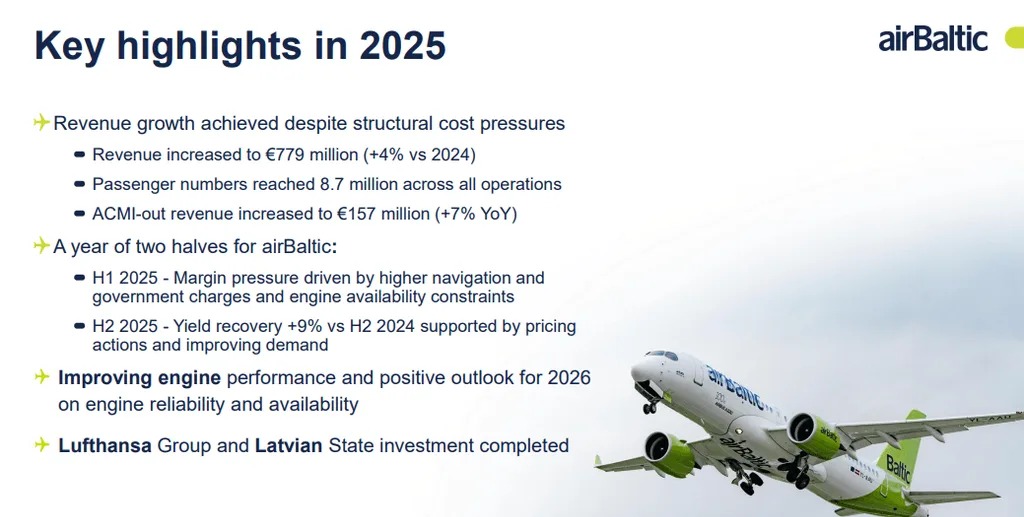
The company currently has approximately $583 million in interest-bearing debt and finance lease liabilities, in addition to about 106 million euros in payroll taxes, aviation taxes, and other expenses that need to be paid. CEO Erno Hilden stated that the goal of this reorganization is to improve profits by about 44 million euros per year, and the entire Chapter 11 process is expected to be completed by June 2027.
The fleet plan is to be reduced to 36 aircraft.
airBaltic currently operates 54 Airbus A220 -300 aircraft, and plans to reduce the fleet to 36 by the end of 2026. The company may also utilize bankruptcy reorganization procedures to cancel or defer some commitments regarding aircraft and engines.
At the same time, the company has commenced negotiations with the union to discuss adjustments to the team of over 3,000 employees. This means that the reorganization will not only involve debt arrangements but will also extend to the control of operational capacity and labor costs.
Pressure on European airlines is rising
Reports indicate that airBaltic is the first European airline to enter bankruptcy proceedings as a result of the current Iranian war-induced crisis in the aviation industry. Previously, the American low-cost airline Spirit Airlines had collapsed in May. The continuously rising cost of aviation fuel is putting greater pressure on airlines with weaker balance sheets and insufficient fuel hedging.
Other airlines have also shown signs of pressure. Norwegian long-haul airline Norse Atlantic initiated formal procedures in July to seek opportunities for sale, merger, or cooperation; Greek Aegean Airlines turned losses in the first half of the year, with reasons including rising fuel costs and unrest in the Middle East.
Wizz Air CEO Jozsef Varadi warns that there may be more mergers and acquisitions in the aviation industry in the coming days, especially among those companies that have not been able to effectively hedge against fuel costs. Wizz Air stated that about 80% of their fuel demand has already been hedged at levels far below current market prices.